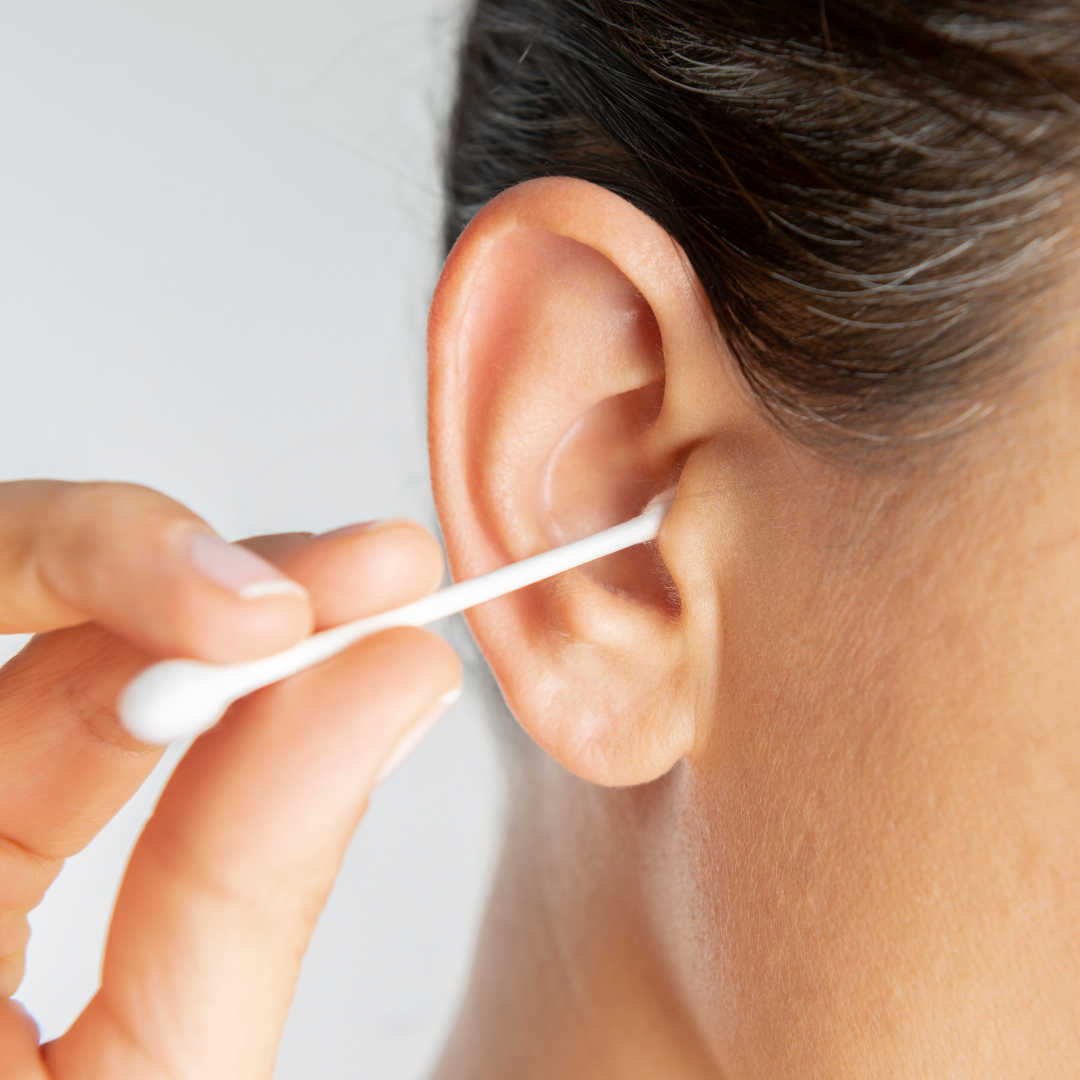
Cotton swabs may seem like convenient ear-cleaning tools, but inserting one into the ear canal can make cleaning harder over time and may damage your ears. We assess whether your earwax demands professional intervention and provide customized care strategies that match your clinical profile. Ears don’t always need manual cleaning; however, if wax builds up, we can help patients safely remove excess wax.
Understanding the Risks of Using Q-Tips in the Ear
Clinically speaking, earwax, or cerumen, should never be regarded as dirt or debris. This substance captures environmental dust, restricts bacterial colonization, conditions the delicate canal walls, and defends fragile skin. Natural temporomandibular jaw motion combined with epithelial migration steadily pushes aging cerumen outward, where it naturally sheds or rinses away in the shower.
Pushing a cotton applicator past the canal opening disrupts this natural physiological transport. While the fibrous tip might extract superficial wax particles, it predominantly forces deeper accumulations toward the tympanic membrane. Repeated use can pack wax into a firm blockage and create the plugged sensation that encourages even more cleaning.
Although swabs can sanitize the outer folds of the auricle, they should never penetrate the delicate ear canal.
Clinical Complications Associated with Q-Tip Insertion
The epidermal tissue coating the ear canal is thin and tears under minimal friction. Minor physical scratches induce pain, trigger localized bleeding, and invite bacterial colonization, increasing outer ear infection rates. The cotton end can also dislodge from the applicator, creating a retained foreign body within the ear.
Common mechanical traumas from swabs include:
- Earwax compressed tightly against canal walls
- Skin abrasions, tissue swelling, severe irritation, and active bleeding
- Acute otitis externa or canal infection
- Foreign body retention including detached cotton fibers
- Traumatic puncture or laceration of the eardrum
- Injury to the tiny hearing bones behind the eardrum
- Transient hearing reduction or permanent sensorineural loss
- Onset of tinnitus, positional dizziness, or acute ear pain
Even though major trauma is uncommon, someone bumping your arm, a sudden hand slip, or deep over-insertion can cause severe damage.
Establishing Safe Intervals for Earwax Extraction
Most healthy adults have no clinical need to extract earwax on a set timetable. Physiologically stable ears continuously migrate wax outward, while standard showering takes care of the visible ear. Excessive cleaning strips natural oils, inflames delicate canal skin, and substantially elevates the chance of infection or impaction.
Intervention becomes necessary whenever wax creates an anatomical blockage, obstructs otoscopic examination, disrupts hearing aid operation, or causes aural distress.
What Are Safe Ways to Remove Earwax At Home?
If your earwax produces no noticeable complaints, leaving it alone is typically the safest protocol. Restrict hygiene to wiping the outer ear folds with a damp cloth while permitting the canal to self-evacuate.
When wax needs softening, we may recommend an over-the-counter cerumen-removal product or drops containing ingredients such as mineral oil, glycerin, saline, or carbamide peroxide. Administer strictly the dosage indicated on the packaging and adhere precisely to the recommended treatment duration. Immediately halt applications if the medication triggers pain, profound dizziness, skin irritation, or deteriorating symptoms.
Performing irrigation at home is unsafe for certain individuals and must only proceed after a clinician verifies ear safety and explains the protocol. Never utilize motorized oral irrigators or dental water devices in the ear canal. Avoid ear candles, metal scoops, camera-guided tools, hairpins, and home suction devices. Such unapproved devices easily burn canal walls, cut fragile skin, puncture the eardrum, or drive cerumen deeper.
When Is Professional Earwax Extraction Necessary?
Set up an audiological evaluation whenever your ear stays plugged after softening care, wax is firmly impacted, or home efforts fail repeatedly. Direct clinical removal is particularly indicated when a patient cannot remain still, possesses tortuous or narrow canals, uses hearing aids, or has a history of ear surgery.
Arrange an immediate clinical evaluation for:
- Acute otalgia, unrelenting canal pruritus, or physical tenderness
- Visible blood, purulent discharge, clear fluid drainage, or offensive ear odors
- Systemic fever or noticeable swelling around the auricle
- Newly developing ringing in the ears or balance disturbances
- Sudden hearing drops or auditory deficits that remain after wax removal
- A suspected perforated eardrum or retained cotton tip
- Persistent impactions interfering with hearing aid operation
A sudden reduction in one ear’s hearing demands emergency evaluation rather than an assumption of wax blockage. Immediate assessment allows clinicians to differentiate an external canal obstruction from an urgent inner-ear pathology.
How Healthcare Providers Extract Impacted Earwax
We always inspect the canal directly using an illuminated otoscope or surgical microscope to confirm cerumen buildup and evaluate for inflammation, injury, or eardrum ruptures. Choosing the safest clinical protocol relies on cerumen firmness, individual canal anatomy, medical records, otologic surgical history, and patient tolerance.
Available professional techniques include:
- Wax-softening drops before or during the appointment
- Controlled irrigation with body-temperature fluid when the eardrum is intact
- Gentle micro-suction performed under clear binocular visualization
- Manual instrument removal utilizing specialized curettes, loops, or micro-forceps
Continuous visual monitoring enables the practitioner to navigate around sensitive epithelial tissue and pause immediately if discomfort arises. Resolving highly compacted or dry earwax often involves integrating multiple clinical removal techniques. After removal, the ear can be reexamined to confirm that the canal and eardrum are healthy. Should lingering fullness, tinnitus, balance instability, or reduced hearing continue, targeted diagnostic exams can pinpoint the secondary factor.
Arrange Safe In-Office Earwax Removal
When your ears feel plugged or you notice auditory changes, schedule an appointment with our specialists instead of grabbing a cotton swab. The diagnostic session entails reviewing your symptom timeline, past otologic procedures, hearing aid usage, past home treatments, and risk factors for recurring cerumen. Contact us now to schedule an appointment for comprehensive, expert earwax removal.