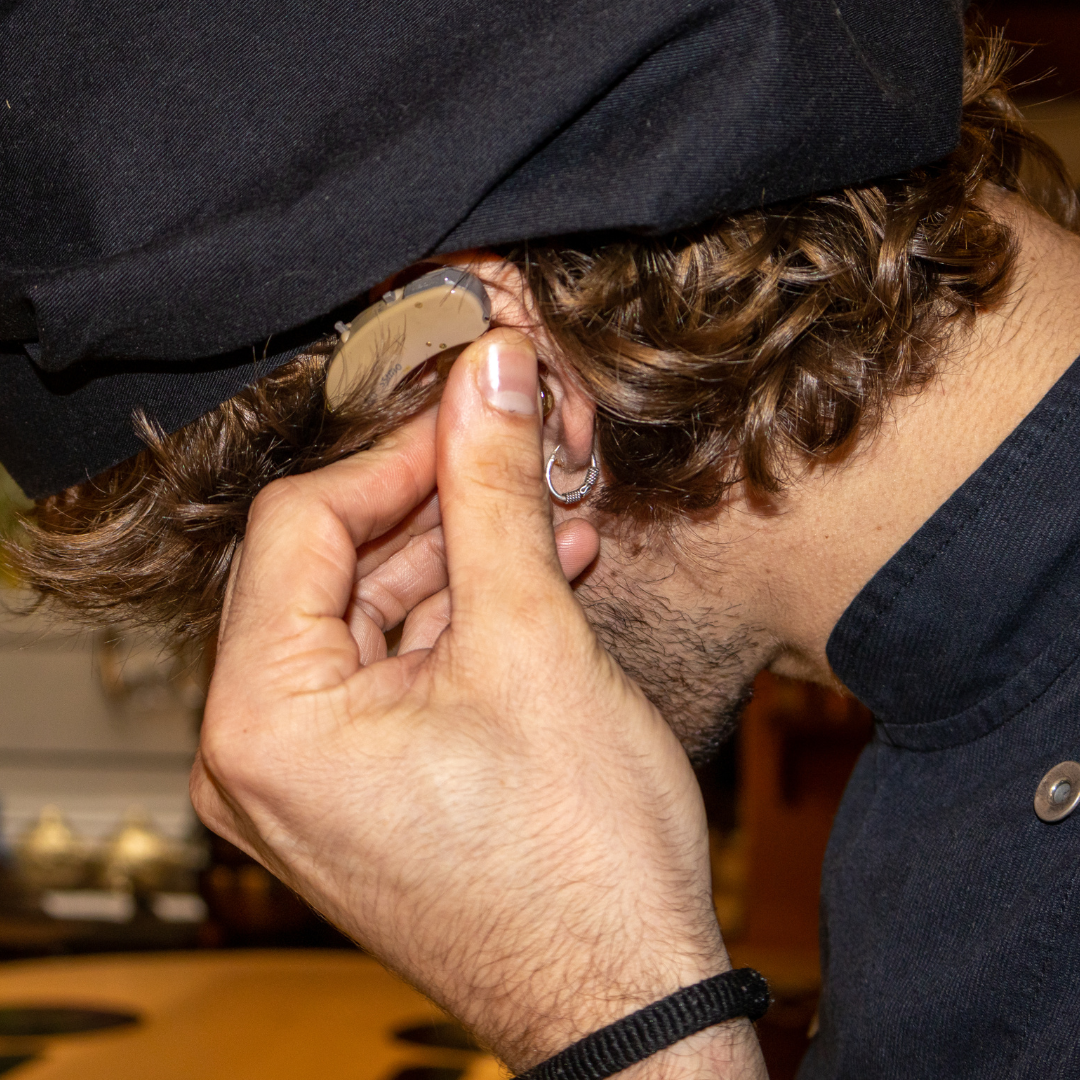
Active restaurant conversations are frequently hard to decipher when surrounding background noise clashes with your hearing. Our specialists can evaluate hearing under both calm and noisy listening conditions to establish why noisy rooms present such difficulty. Once we determine the cause of difficult hearing, we can help you find personalized solutions.
Why Do I Hear Well in Quiet but Struggle in Restaurants?
Calm domestic settings establish a positive signal-to-noise ratio, allowing target speech to stand out clearly from faint background noises. Modern restaurant environments create the complete opposite listening environment. Overlapping chatter, piped music, kitchen clatter, and hard-surface reverberation mask speech, forcing the brain to expend immense cognitive effort to track conversation.
Such listening challenges typically stem from high-frequency hearing loss, auditory-processing deficits, or accumulated noise-induced trauma. Factors including listening fatigue, poor dining lighting, acoustic distance, and wandering attention make comprehension significantly harder. Some people have normal results on a basic hearing test but still perform poorly on speech-in-noise testing. Disproportionate difficulty in restaurants justifies professional clinical assessment even if your everyday home hearing appears intact.
The Audiological Process for High-Frequency Hearing Loss
Diagnostic assessment begins by documenting specific listening breakdowns, recreational noise exposure, tinnitus symptoms, medications, and hereditary auditory patterns.
Clinical pure-tone audiometry identifies hearing threshold levels across various frequencies by delivering sounds through air and bone pathways. In high-frequency hearing loss, the audiogram reveals a sloping configuration where hearing acuity drops progressively as pitch frequencies increase. Diagnostic evaluations may also integrate acoustic tympanometry to check middle-ear pressure alongside word-recognition testing to evaluate speech processing.
Because a quiet booth does not recreate a busy dining room, speech-in-noise testing can add valuable information. This diagnostic protocol measures your capacity to understand target words or sentences against progressively louder multi-talker babble. Collectively, these evaluations clarify if your challenges relate to raw audibility, phonetic clarity, signal-to-noise processing, or compound factors.
How Auditory Processing Difficulties Impact Adult Hearing
A central auditory processing disorder disrupts the neurological transmission and cognitive interpretation of sound waves. The ears may detect tones at expected levels, but the brain may have difficulty organizing competing signals, distinguishing similar speech sounds, or following rapid conversation. We prioritize assessing peripheral auditory acuity before recommending an in-depth central auditory-processing assessment or external medical referrals.
Behavioral Strategies for Hearing Clearly in Loud Venues
Minor environmental adjustments can boost speech acoustic signals and supply critical visual lip-reading cues. Prioritize dining at establishments designed with subdued acoustics or reserve tables during non-peak business hours. Settings constructed with comfortable booths, acoustic ceiling panels, drapery, and carpeted walkways facilitate easier communication than open venues with concrete and glass.
In-venue communication guidelines:
- Select a secluded table situated away from prep kitchens, crowded bar stations, loudspeaker zones, and large parties.
- Sit with your back near a wall to reduce noise coming from behind you.
- Face your speaking partners directly in well-illuminated seating to maximize visual speech cues.
- Keep the distance between speakers as short as comfortably possible.
- Orient your stronger ear toward the key person you want to follow in conversation.
- Prompt companions to rephrase unclear sentences with alternate terminology instead of repeating identical words.
- Clarify critical details explicitly instead of nodding along or pretending to catch the message.
- Allow yourself a short listening respite when auditory concentration starts to feel drained.
- Request that friends speak with crisp clarity rather than speeding through dialogue.
- Yelling distorts natural speech formants and rarely makes spoken words easier to decipher.
Assistive Hearing Tools and Technology for Complex Acoustic Environments
Choosing the most effective auditory device requires evaluating diagnostic findings, acoustic lifestyle factors, and the presence of hearing loss. Professionally programmed hearing aids incorporate multi-channel directional microphones, digital noise reduction algorithms, and custom restaurant settings to capture frontal speech while attenuating background interference. Patients must uphold realistic expectations because modern amplification cannot strip out every ambient human voice completely.
Remote wireless microphones offer an exceptional boost to the signal-to-noise ratio in challenging venues. Worn on the speaker’s collar or set on the table, the microphone broadcasts direct audio to paired hearing aids or specialized receivers. By streaming directly, this technology overcomes acoustic falloff from distance and surrounding environmental noise.
Further practical hearing technology options include:
- Omnidirectional table microphones designed for group dining tables
- Telecoils or hearing-loop systems in equipped venues
- Mobile device live-captioning programs and speech-to-text transcription software
- Advanced hearables incorporating assistive directional listening programs
- Sound-level or restaurant-review tools for finding quieter locations
We can compare options, confirm compatibility, and teach you how to use the selected device.
Clinical Audiology Care for Hearing in Complex Noise
Undergoing a formal hearing evaluation takes your care beyond the limited baseline of hearing adequately in quiet spaces. Our clinicians review the specific environments, vocal pitches, and decibel levels that trigger breakdowns to design a personalized test protocol. Your diagnostic appointment may incorporate pure-tone air and bone thresholds, acoustic middle-ear testing, word-recognition scores, and speech-in-noise measures. Advanced auditory-processing testing can be introduced whenever medical history and baseline assessments justify specialized evaluation.
Rapidly progressing, asymmetrical, or sudden hearing decline warrants an urgent clinical referral to an ear, nose, and throat physician. Personalized patient care establishes the true medical source of your listening problems instead of assuming ambient noise is solely responsible.
Arrange a Hearing Evaluation With Us Now
If noisy restaurant gatherings leave you struggling to follow dialogue, pulling away, or feeling completely drained, schedule an audiological evaluation with our team. Our clinical team will determine the best strategies to improve your hearing in noisy environments through custom hearing-aid programming, remote microphones, or targeted auditory rehabilitation.
Contact our audiology office today to schedule your evaluation and move toward effortless, confident conversations.