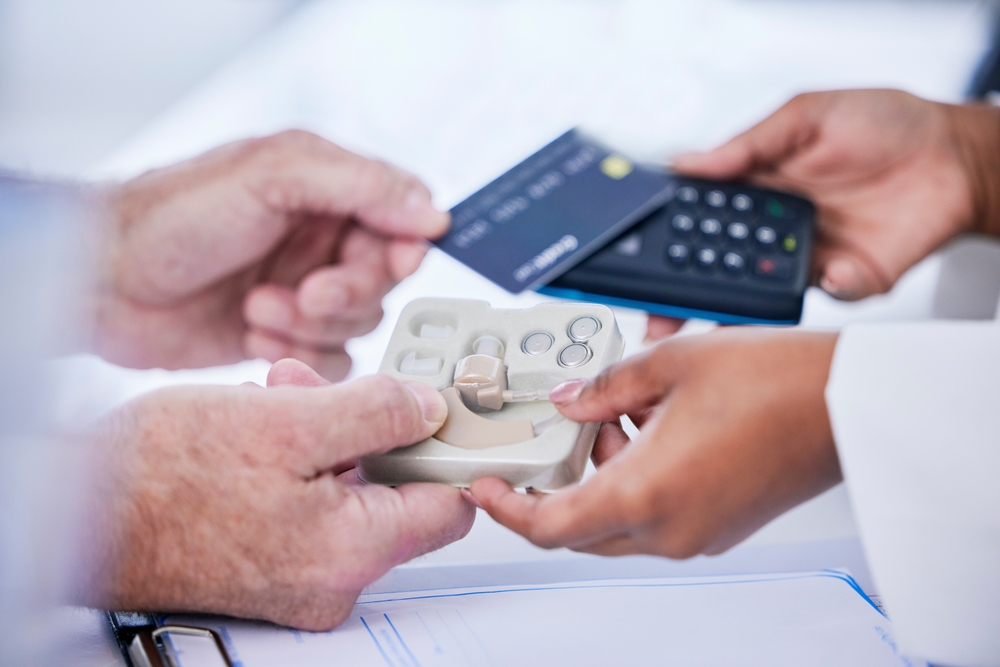
If you’ve looked into hearing aids, one of the first things you’ve probably noticed is the price. Based on the sophistication of the digital signal processing and the required audiometric programming, these devices span a wide pricing spectrum. For many people, that comes as a surprise, and it can understandably feel like a stopping point.
The sticker price is a real metric, yet it rarely reflects the actual net expenditure for the patient. It is a common misconception that the full list price must be borne entirely by the consumer. Between insurance, pre-tax accounts, and financing options, there are multiple ways to reduce or spread out the cost.
This guide walks you through the most common options so you can understand what’s available before you go into an appointment and, hopefully, feel more confident about the investment in your hearing health.
Evaluating Third-Party Payer Coverage for Auditory Rehabilitation
Prior to resigning yourself to full private payment, a rigorous audit of your healthcare policy is required.
For individuals holding commercial or corporate group health policies, benefit structures for otologic devices are highly inconsistent. A number of policies indemnify a fraction of the cost, contrasted with plans that provide a capped benefit cap. Conversely, distinct health plans explicitly exclude hearing aids from their covered medical benefits. To clarify your position, review your summary of benefits or contact the carrier regarding otolaryngological provisions. Inquire specifically about monetary caps, whether real-ear measurements and fittings are covered, and your preferred provider network status.
When navigating public health options, recognize that traditional federal Medicare components do not subsidize these devices. Conversely, privately administered Medicare Advantage options frequently offer hearing-specific stipends as a core incentive.
For patients utilizing state-administered Medicaid, the availability of auditory benefits is determined strictly by state law. Certain jurisdictions offer full or partial device funding for qualified applicants, which your clinic can help verify.
Maximizing Health Savings and Flexible Spending Accounts for Otologic Technology
Individuals contributing to an HSA or FSA possess a specialized tax-mitigation tool perfectly suited for audiological procurement.
Hearing aids are a qualified medical expense, which means you can use pre-tax dollars to cover the cost. Utilizing this financial pathway yields substantial savings that alter the economic equation. To illustrate, a patient in the 22% federal tax tier purchasing a $2,000 system reduces their real economic impact to approximately $1,560. While HSA vehicles allow long-term capital accumulation, standard corporate FSAs enforce a rigid use-it-or-lose-it clause each calendar cycle. This structural timeline makes it imperative to exhaust expiring corporate flex funds before the termination date! The IRS rules extend to both advanced prescription systems and compliant OTC variants, justifying a review of your account balance.
Amortization and Medical Financing Strategies for Advanced Hearing Systems
Many hearing care practices offer hearing aid financing options that allow you to spread payments over time instead of paying everything up front. These specific arrangements, often administered via platforms such as CareCredit, frequently feature promotional interest-free windows. Consequently, patients are empowered to select the appropriate level of technological sophistication rather than compromising on their clinical needs.
Integrating payment plans into your treatment discussion is a routine and professional practice. Patients experiencing financial hesitation should openly review these parameters during their diagnostic evaluation. Keep in mind that these diverse consumer pathways were developed to address these precise medical realities! The medical community firmly believes that securing vital sensory rehabilitation should never require severe financial disruption.
Maximizing VA Healthcare Services for Service-Connected Hearing Deficits
With hearing deficits ranking as a primary consequence of military service, the VA delivers comprehensive support mechanisms for veterans.
Veterans meeting specific enrollment criteria can procure advanced prescription amplification devices entirely through VA medical benefits. Regardless of whether your auditory deficit is directly tied to your service record, your general enrollment status can open these pathways. For those who have yet to leverage their military benefits, initiating a query with your regional VA medical center is strongly advised.
Alternative Community-Based Grant and Aid Programs for Hearing Hardware
Non-governmental organizations frequently operate dedicated programs designed to make otologic equipment accessible. Renowned non-profits like the Starkey Hearing Foundation and civic clubs like the Lions Club routinely sponsor individuals requiring acoustic aid. Additionally, select state health departments manage specialized equipment distribution programs for qualifying low-income residents.
Though administrative processing times and qualification reviews apply, these non-profit options provide crucial lifelines for the under-insured. You can check online with most of these organizations to see if you qualify, or at least get the conversation started.
OTC Hearing Hardware: A Technical Assessment of Lower-Cost Auditory Options
Positioned as a budget-conscious retail category, OTC systems generally command a retail price from $200 to $1,000 per set. Such devices are clinically appropriate for mild or early-stage moderate presbycusis in self-directed adult users.
However, omitting an individualized audiometric diagnostic fitting frequently leads to suboptimal user satisfaction and poor device retention. For individuals demonstrating pronounced or complex sensory deficits, physician-fitted clinical devices consistently yield superior acoustic gain stability.
Before choosing OTC purely for cost reasons, it’s worth getting a hearing evaluation to ensure what will actually work for you. Retail devices function adequately as a temporary placeholder while awaiting insurance pre-authorization or institutional grant approvals. They provide immediate, basic acoustic access that outperforms unamplified conditions, though they lack long-term clinical viability.
A Collaborative Approach to Affordable Hearing Care and Device Selection
Our administrative staff is deeply experienced in aligning technological needs with realistic financial solutions for our community. Most individuals are pleasantly surprised by the diversity of available payment pathways once analyzed.
We request that you present your comprehensive policy details during your consultation so we can map out covered benefits and structure an affordable plan. Phone our office location today to secure a consultation slot or coordinate your evaluation via our website. We are fully prepared to assist you in designing a financial strategy for your treatment that remains sustainable.