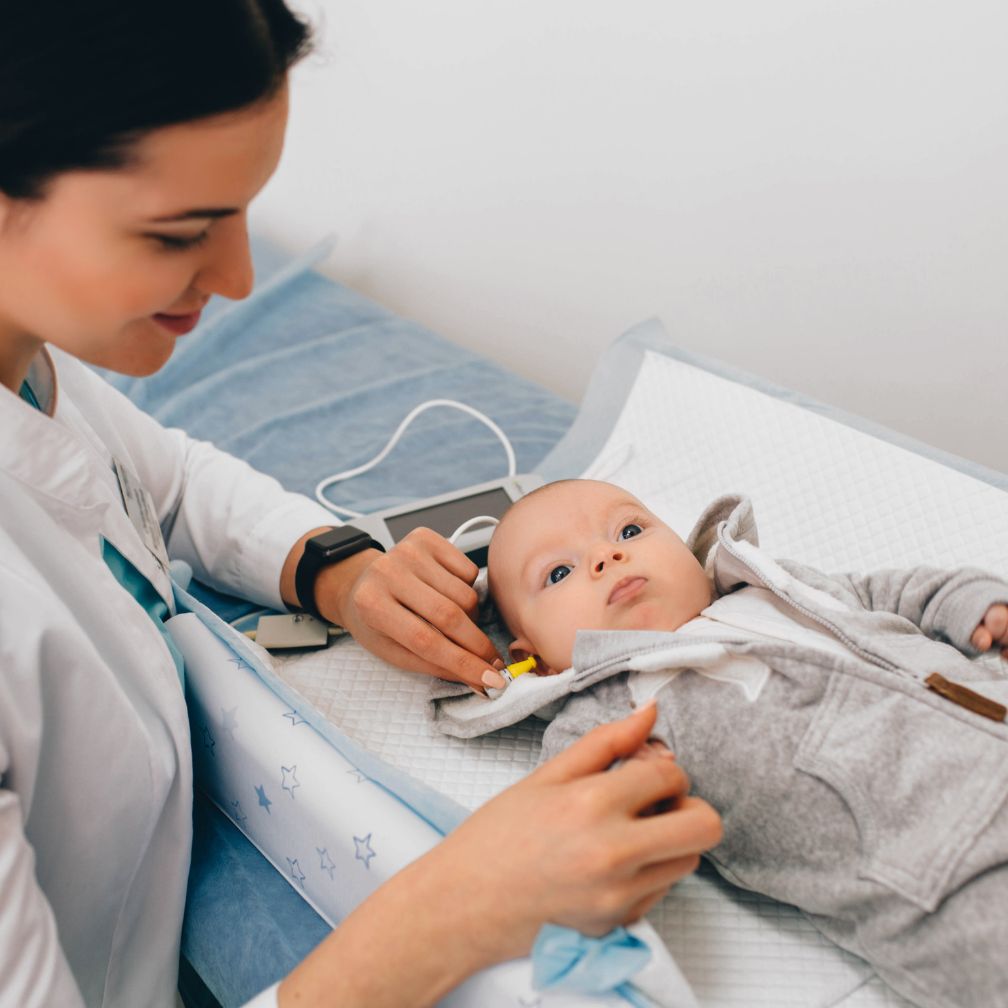
For parents holding a newborn, getting a diagnosis of early auditory impairment naturally causes profound stress and concern. Yet the optimistic truth is that via rapid screening and support, young children facing auditory deficits routinely attain profound developmental success. Indeed, these babies regularly develop speech capabilities, relational skills, and strong connections across their social sphere, guaranteeing a prosperous life!
Utilizing individual hearing aids alongside surgical cochlear implants offers two exceptionally successful approaches for supporting infants with hearing loss. Down below, we investigate their mechanisms of action to help you decide which pathway best serves your youngster.
Exploring Causes of Auditory Loss in Infants
Hearing impairment in newborn infants typically originates from several potential sources, including:
- Potential genetic predispositions (even without recorded familial lineage)
- Perinatal infectious diseases like cytomegalovirus (CMV) or rubella transmission
- Delivery difficulties, such as acute oxygen deprivation or early birth
- Specific clinical medications given during neonatal intensive care stays
Which step demands immediate priority? Prompt diagnostic confirmation. Because of this, newborns in American medical centers receive auditory checks before leaving the care nursery. Pediatric hearing experts routinely implement the “1-3-6” guideline:
- Screened by 30 days of life
- Definitive medical diagnosis secured before 90 days of life
- Direct clinical management (utilizing hearing tools or specialized rehabilitation) established before 6 months of age
Reaching these target timelines offers infants an unparalleled opportunity for normal speech, expressive language, and cognitive progression. If you want guidance on these diagnostic stages, your primary pediatrician remains ready to assist!
Infant Hearing Aids: Overview & Benefits
When infants display mild to severe hearing challenges, custom hearing aids usually act as the frontline remedy. Such small, wearable instruments elevate environmental sound levels, aiding babies in discerning human speech and ambient sounds more accurately.
Tailored infant hearing instruments serve as:
- Dermatologically and structurally safe for young infants a few weeks post-birth
- Manufactured with cushioned, protective ear molds that get remade as the child expands
- Built with secure, tamper-resistant battery latches and specialized pediatric safety components
- Expertly programmed by a pediatric hearing professional to target your infant’s specific hearing levels
During physical development, these hearing instruments require routine recalibration to guarantee physical comfort and optimal performance.
Cochlear Implants for Infants
When an infant presents with profound sensorineural hearing loss and derives insufficient benefit from wearable aids, a cochlear implant stands as a primary recommendation. In contrast to conventional amplification tools, cochlear implants:
- Entail precision surgical insertion inside the inner ear delivering direct electrical signals to the brain
- Safely route around damaged structures within the cochlear system
- Translate acoustic signals into direct electrical impulses that actuate the nerve of hearing
Integrated cochlear implant systems serve as:
- Formally cleared by the FDA for infants as young as 9 to 12 months
- Highly effective when paired with early intervention and dedicated household support
- Advised exclusively after a complete clinical review by a certified audiologist and otolaryngologist
That pre-surgical path incorporates imaging, specialized auditory testing, and conversations about long-term expectations and outcomes.
Hearing Aids vs. Cochlear Implants: What’s the Difference?
- Mild to severe hearing loss relies on Hearing Aids; Severe to profound hearing loss requires Cochlear Implants
- Non-Invasive wearable design: Hearing Aids; Invasive (Surgical): Cochlear Implants
- Standard sound amplification logic: Hearing Aids; Direct electrical signal generation: Cochlear Implants
- Application starts during early infancy: Hearing Aids; Access starts at 9-12 months: Cochlear Implants
Closing Perspective: Choosing Between Hearing Aids and Implants
Should your baby receive a formal hearing loss diagnosis, you have access to outstanding technological paths and robust community resources exist to help you. By partnering with skilled pediatric auditory specialists, countless infants successfully cultivate communication skills that mirror those of their age group.
Whether your baby benefits most from custom hearing aids or a cochlear implant system, early intervention establishes a foundation for lifelong communicative success.
Do you need professional advice regarding your baby’s current hearing health? Reach out to our specialists today for a complete diagnostic review and tailor-made care roadmap.